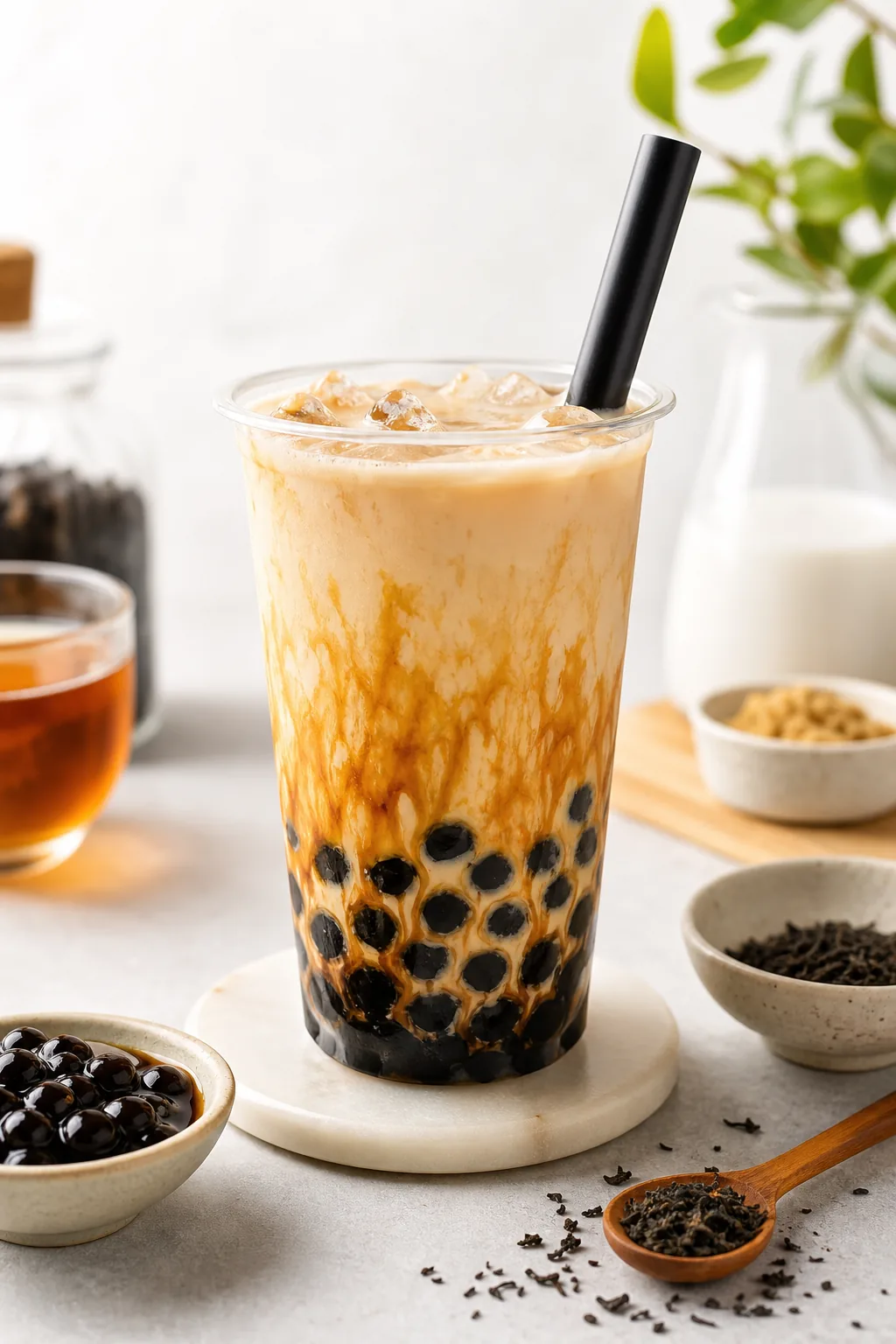
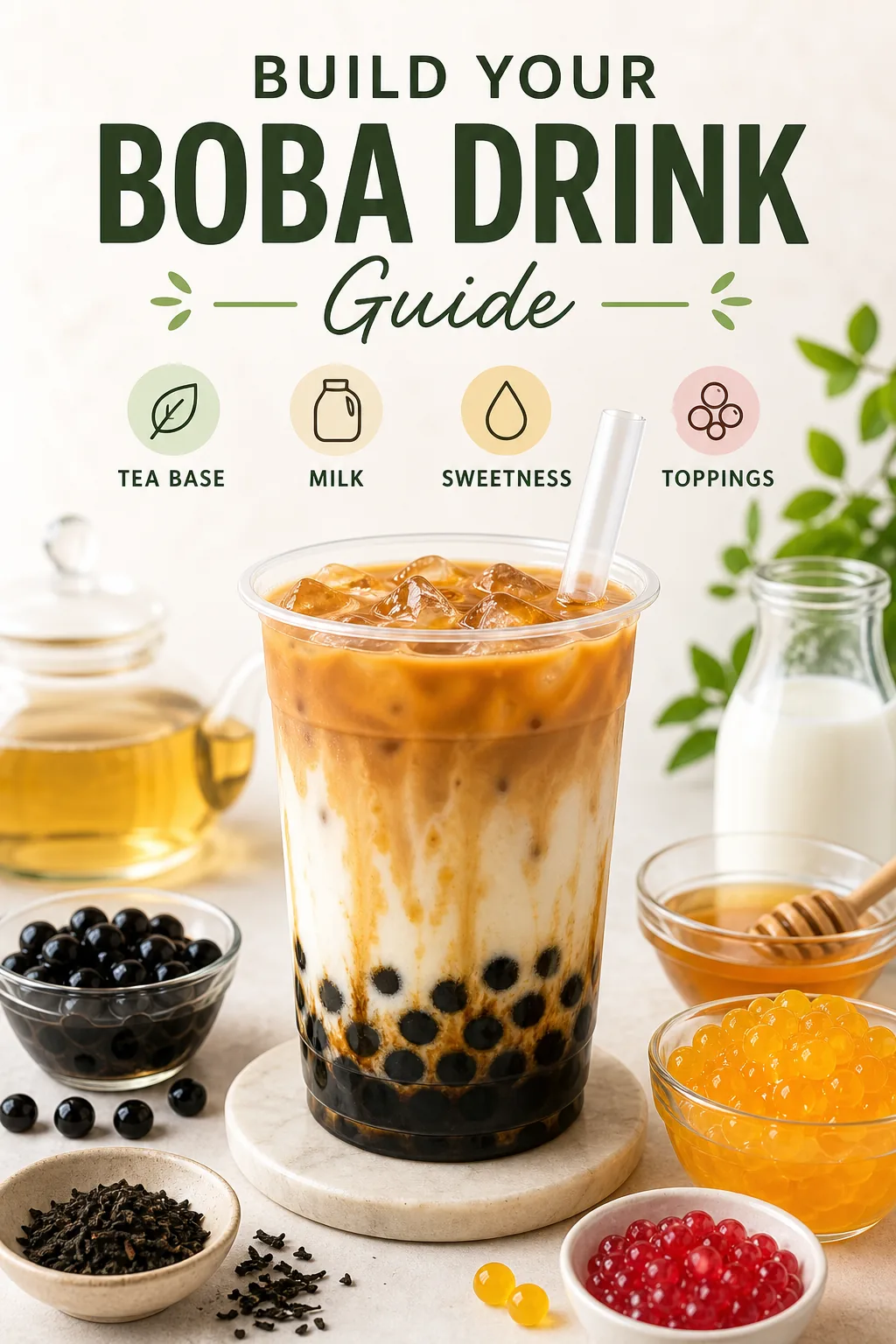
Build Your Boba Drink Guide is a practical guide for making better bubble tea at home. Instead of memorising one drink, you learn how the pieces work: tea base, milk, sweetness, toppings. Once those pieces make sense, it becomes much easier to build milk tea, fruit tea, matcha boba, coffee boba and dairy-free drinks that actually taste like something you would buy.
Beautiful boba is not only about the photo. It needs a strong base, chewy or juicy toppings, balanced sweetness and a cup that is easy to drink. This guide keeps the process beginner-friendly while giving you enough detail to avoid the most common failures.
Start with the Role of Each Ingredient
Tea gives structure. Milk gives body. Syrup carries sweetness and aroma. Pearls and toppings provide texture. Fruit adds brightness. Ice controls temperature and dilution. When one part is weak, the whole drink feels less satisfying.
For homemade bubble tea, buy the best tea you can reasonably afford and use toppings that match the drink. Brown sugar pearls suit milk tea and coffee boba. Popping boba is better in fruit tea. Cheese foam works with jasmine, oolong, matcha and fruit drinks when you want a salty-creamy finish.
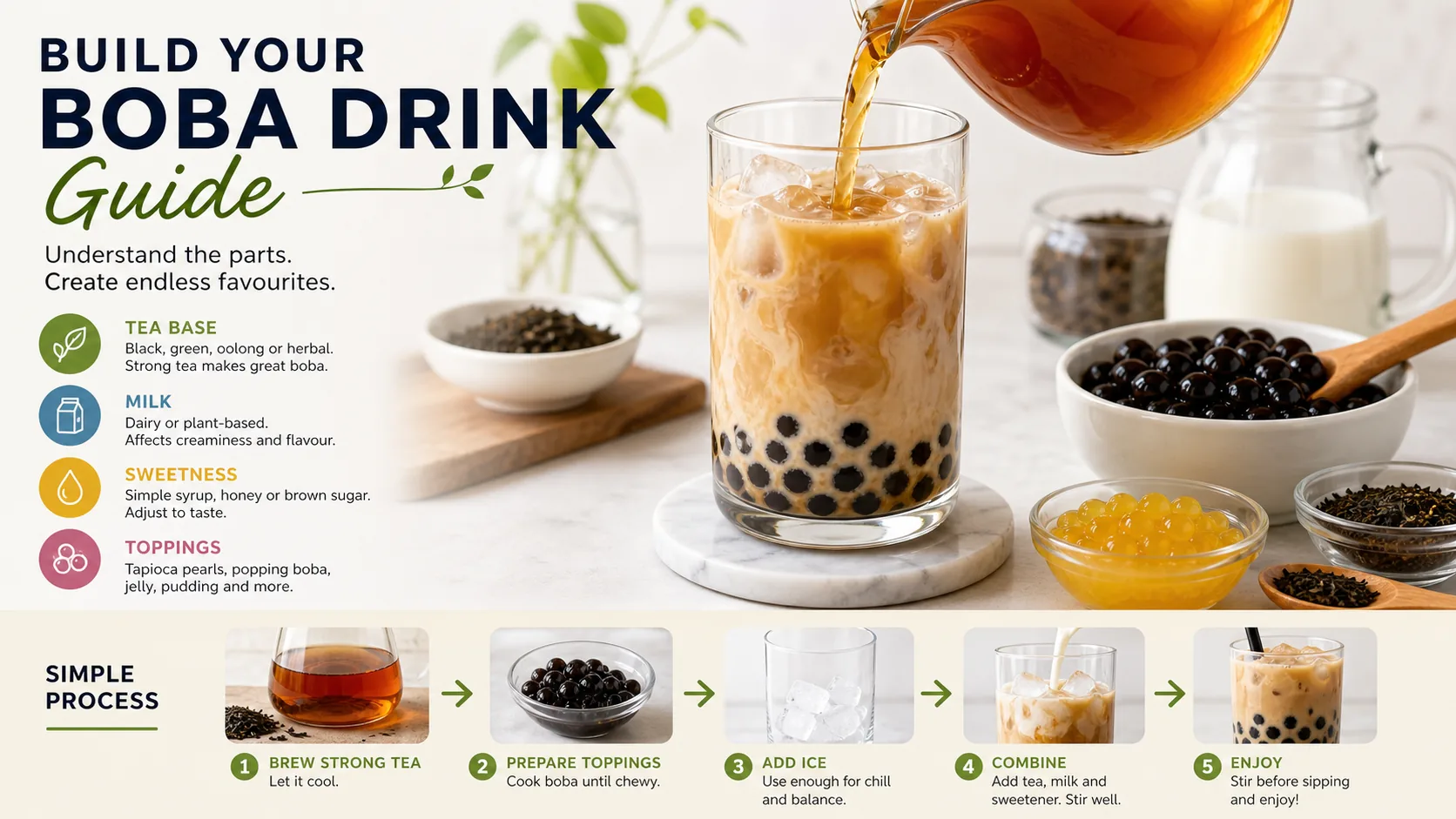
Build Your Boba Formula
- Choose a base: black tea, jasmine green tea, oolong, matcha, coffee or fruit tea.
- Choose milk or no milk: dairy milk, oat milk, soy milk, coconut milk or a clear fruit tea style.
- Choose sweetness: unsweetened, half sweet, classic sweet or brown sugar rich.
- Choose texture: tapioca pearls, jelly, popping boba, grass jelly, red bean or cheese foam.
- Choose the finish: fruit puree, syrup streaks, foam cap, fresh fruit or a simple wide straw.
That structure can become dozens of drinks. Black tea plus milk and pearls becomes classic milk tea. Jasmine tea plus mango puree becomes fruit tea. Matcha plus strawberry puree and milk becomes a layered matcha boba. Coffee plus condensed milk and pearls becomes coffee boba.
Where to Buy Boba Ingredients
In the United States, Asian grocery chains, local Asian markets and online boba suppliers are the easiest places to find pearls, powders, jelly and wide straws. In Canada, T&T and regional Asian grocers are strong options. In the UK, look for online East Asian pantry shops, larger Asian supermarkets and international grocery stores. In Australia, Asian grocers and specialty bubble tea suppliers often carry both quick-cook and traditional pearls.
For beginners, start with quick-cook tapioca pearls, one black tea, one green tea, one syrup and one topping. You can add matcha, taro, ube, fruit puree and cheese foam once you know which drinks you repeat.
How to Keep Tea from Tasting Bitter
Bitterness usually comes from water that is too hot, tea that steeps too long or too many leaves packed into too little water. Black tea can handle hotter water than green tea. Jasmine green tea and matcha need more care. If your tea tastes harsh before milk is added, it will still taste harsh in the finished drink.
Brew tea a little stronger for bubble tea, but do not punish it. Use more leaves for a shorter steep rather than boiling the tea until it tastes flat and tannic. Cool the tea before adding ice so it does not water down too quickly.
Storage and Make-Ahead Advice
Tea can be brewed ahead and chilled for a day. Syrups and fruit purees can usually be made ahead and kept refrigerated for several days. Cooked tapioca pearls are different: they are best fresh and should be served within a few hours. If you need to prep for friends, cook pearls last and keep them warm in syrup while everyone builds drinks.
Troubleshooting
If pearls are hard in the centre, they were undercooked or cooled too quickly. If they are mushy, they cooked too long or sat in too much water. If tea tastes weak, brew it stronger before adding milk. If fruit tea tastes dull, add a little acidity with lemon or lime.
If the drink looks messy, use more ice and pour slowly. A clear cup, a tilted glass and a steady pour do more for the final look than complicated decoration.
FAQ
What is the best beginner boba recipe?
Brown sugar milk tea with store-bought pearls is the easiest starting point because the ingredients are widely available and the flavour is familiar.
Can I make bubble tea dairy free?
Yes. Oat milk works in most milk teas. Coconut milk works with mango, taro, ube and Thai tea. Soy milk is good with black tea and jasmine tea.
Do I need special equipment?
No. A saucepan, measuring cups, a jar with a lid, a fine strainer and wide straws are enough for most recipes. A cocktail shaker and digital scale are helpful upgrades.
Buying Notes for Home Boba Makers
For readers in the United States and Canada, Asian supermarkets are usually the most reliable place to buy tea, tapioca pearls, jellies, powders, wide straws and clear cups. H Mart, T&T, 99 Ranch Market, Mitsuwa and local independent grocers often carry more useful options than a standard supermarket. Online boba suppliers are helpful when you want quick-cook pearls, popping boba, sealed cups or cafe-style powders in specific flavours.
In the United Kingdom, look at East Asian grocery stores, larger international supermarkets and online pantry shops that sell Taiwanese, Chinese, Japanese or Korean ingredients. In Australia, Asian grocers are common in many cities and tend to stock pearls, grass jelly, fruit syrups and tea powders. In English-speaking European markets, online ordering may be easier for toppings, while loose tea and plant milks are usually available locally.
When choosing products, read the package before buying. Quick-cook tapioca pearls are convenient but can be softer and less complex than traditional pearls. Some powders already include sugar and creamer, so they need less syrup and milk. Some fruit syrups are very sweet, while fruit purees taste fresher but may need refrigeration. A good home boba pantry starts small: one tea, one milk, one syrup and one topping.
Build Your Boba Framework
Use this simple framework when creating a drink from scratch. Choose one tea base first: black tea for classic milk tea, jasmine for floral fruit drinks, oolong for roasted depth, green tea for mango and lychee, or matcha for layered lattes. Next choose the body: whole milk for classic richness, oat milk for dairy-free creaminess, coconut milk for tropical flavours, or condensed milk when the drink should feel dessert-like.
Then choose sweetness. Half sweet is the safest starting point because pearls, fruit and toppings often add more sugar than expected. Finally choose texture. Tapioca pearls make the drink feel classic, popping boba makes it juicy, grass jelly makes it lighter, and cheese foam gives a salty-creamy top. If two toppings fight for attention, remove one and let the drink breathe.
Troubleshooting Checklist
If tea tastes bitter, lower the water temperature, shorten the steep time or use more tea for less time. If tea tastes weak, brew it stronger before adding milk and ice. If pearls are hard, they may be undercooked, old or cooled too long without syrup. If pearls are mushy, they may be overcooked or left in hot water after cooking.
If a drink tastes flat, add a pinch of salt, a little more tea or a small splash of citrus for fruit drinks. If it tastes too sweet, add unsweetened tea, milk or ice rather than trying to cover the sweetness with more toppings. If layers disappear immediately, use more ice, pour slowly and build thicker components at the bottom of the cup.
Make-Ahead Rhythm
The most practical routine is to prepare tea, syrups and purees ahead, then cook pearls shortly before serving. Brewed tea can be chilled for a day if it is covered and unsweetened. Syrups can be made in small jars and used through the week. Fruit purees are best in smaller batches because they lose brightness faster than syrup.
Do not fully assemble bubble tea hours ahead for guests. The ice melts, the tea dilutes and the pearls change texture. Instead, set up a small drink station with chilled tea, milk, syrup, toppings and clear cups. It looks inviting, keeps the ingredients in better condition and lets each person choose sweetness, milk and toppings.
Smart Shortcuts That Still Taste Good
Homemade bubble tea does not need to be complicated every time. The smartest shortcut is to buy quick-cook pearls, then spend your attention on the tea base and sweetness. A strong, freshly brewed tea with properly warmed pearls will taste better than a complicated drink built on weak tea. Another useful shortcut is to keep one syrup ready in the refrigerator, such as brown sugar syrup or honey syrup, so weekday drinks take minutes instead of feeling like a project.
For fruit drinks, frozen fruit is often better than out-of-season fresh fruit. Blend it with a little tea or water, then adjust with lemon or lime. For milk tea, use shelf-stable powders carefully because many are already sweetened. Add half the suggested amount first, taste, then build up. For matcha, buy a powder you enjoy drinking and sift it before whisking; clumps are one of the easiest ways to make a homemade drink feel unfinished.
Serving and Scaling for Friends
When making drinks for more than two people, scale components separately. Brew a larger batch of tea, chill it, cook pearls close to serving time and keep syrup in a small pitcher. Let guests choose milk, sweetness and toppings at the counter. This avoids over-diluted pitchers and keeps each glass photogenic.
Use clear cups for layered drinks and shorter glasses for creamy milk teas. Fill with enough ice to slow the pour, but not so much that the drink tastes watery after five minutes. If you want a cleaner look, wipe the rim before serving and place toppings where they can be seen through the glass. A drink that looks intentional is more likely to be shared, saved and made again.
What to Track as You Improve
Keep quick notes the first few times you use this guide. Write down the tea brand, steep time, milk, syrup amount and topping. Bubble tea is very adjustable, which is wonderful, but it also means a favourite version can be hard to repeat if nothing is measured. After two or three batches, patterns become obvious. You may learn that you prefer oolong with less syrup, jasmine with fruit, oat milk with brown sugar pearls or coconut milk with mango.
Those notes also help when buying ingredients again. If a product makes pearls too soft, tea too bitter or drinks too sweet, replace that specific piece instead of changing the whole recipe. This is how home boba becomes easier, cheaper and more personal over time.