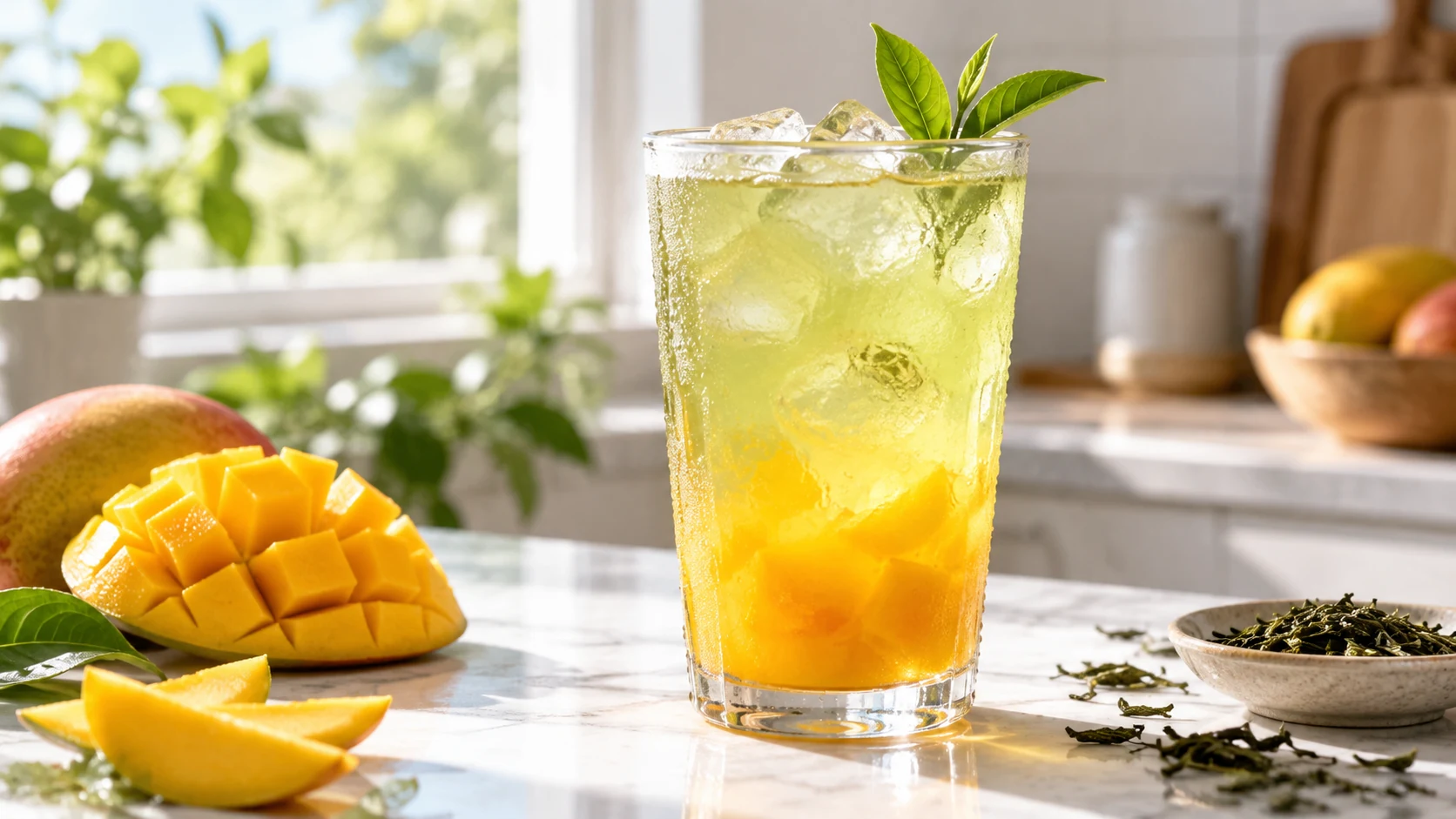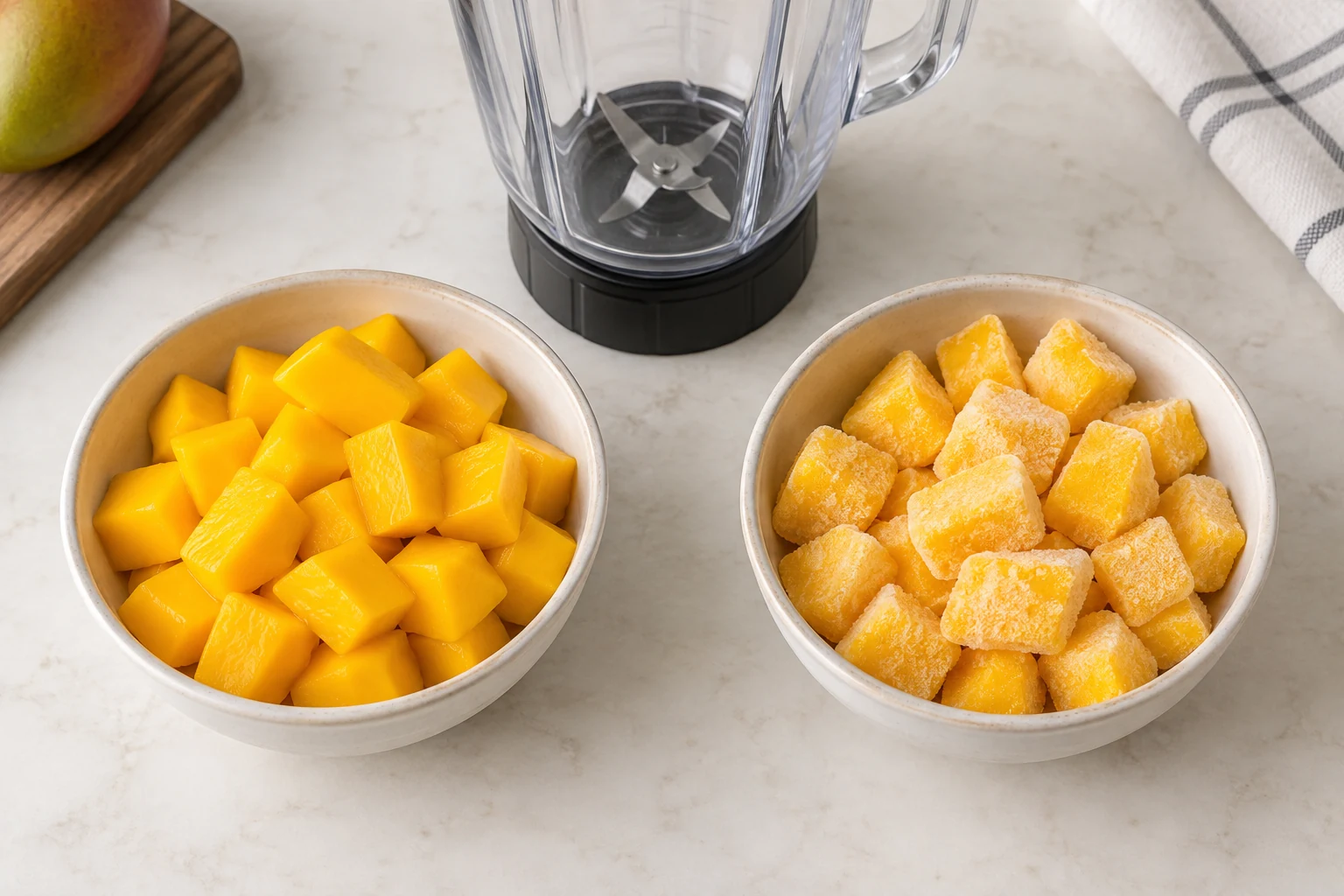
Frozen fruit can play three different roles in bubble tea: a fruit component that is thawed before mixing, an ingredient cooked before cooling, or part of a blended icy drink. Decide which role you need before opening the bag. “Frozen” describes its storage state; it does not automatically mean ready to eat or suitable for every blender.
This guide is about selecting and handling the fruit component, not a complete mango-puree recipe. It combines official food-safety guidance with practical drink-planning advice. Package directions and relevant advice from the food-safety authority where you live take priority over a general smoothie photograph.
Read the bag while you are still at the freezer
Check the fruit identity, ingredient list, preparation instructions, storage directions, and whether the product is described as ready to eat. A bag of plain fruit is different from fruit packed with sugar or a prepared smoothie mixture. The extra ingredients may be useful, but they should be an intentional choice.
If shopping in the United States, the FDA's explanation of sugar labeling helps separate total sugars from added sugars. Fruit's naturally present sugars contribute to total sugars; added sugar is a separate part of that total. “No added sugar” does not mean the fruit contains no sugar.
For a repeatable tea, a single-fruit bag makes it easier to identify what you like. A mixed bag introduces several flavors at once, and the pieces in one scoop may not match another scoop exactly. If you use a mixture, note the product and approximate portion rather than claiming that every glass has a precisely measured fruit blend.
Choose a size you can store properly after opening. A large bag is inconvenient if it cannot close securely or fit in the freezer. Follow its storage direction, and bring frozen purchases home promptly so the shopping trip does not become an unplanned thawing stage.
A blender does not replace a required cooking step
The FDA explains that freezing stops most bacterial growth but does not kill most bacteria. It also directs consumers to follow commercially frozen foods' cooking instructions. A blender changes particle size and texture; it does not satisfy an instruction to cook the fruit.
There is also location-specific advice. Ireland's Food Safety Authority recommends boiling imported frozen berries for one minute before consumption, following outbreaks involving viruses. Its page explicitly distinguishes that advice from advice about fresh berries. Do not turn this Irish recommendation into a claim that every frozen fruit everywhere requires exactly the same treatment.
Instead, use a two-part check: what does this package require, and does your local authority give additional advice for this fruit? A bag's suitability for a smoothie should not be inferred solely from its front image. When serving someone who needs stricter food-safety precautions, follow the relevant authority's guidance for that person as well.
If the product needs cooking, complete that step before planning the cold drink. Cool and refrigerate it appropriately afterward. Do not add a hot cooked fruit mixture to a sealed personal blender cup unless the appliance explicitly permits that use; follow the blender's temperature and loading instructions.
Choose one of three preparation paths
Thaw for a pourable fruit component. If the fruit can be used without a cooking step under the applicable instructions, transfer only the required portion to a clean covered container in the refrigerator. The FDA identifies refrigerator thawing as a safe method. Avoid leaving a bowl on the counter as the default preparation plan.
Keep any released liquid with the portion initially, then decide how much belongs in the drink. If you drain it, record that choice so the next batch follows the same method. Otherwise two equal weights of frozen fruit may lead to noticeably different amounts of liquid in the finished glass.
Cook, then cool. Use this path when the package or relevant authority calls for heating. Follow that guidance completely instead of warming the surface just enough to soften the pieces. Prepare the fruit ahead of the drink so safe cooling and chilling are not rushed by guests waiting with empty glasses.
Blend from frozen. Use this only when the product is suitable for that use and the appliance supports frozen ingredients. Consult the blender's directions for liquid, loading order, batch size, and maximum fill. Do not invent a universal sequence for machines with different blade and cup designs.
Decide whether you want tea or slush
A drink made with substantial frozen fruit may become a blended icy drink rather than a clear tea. That is a useful choice when intentional. If you want a tea you can sip easily with a topping, a chilled, pourable fruit component gives you more control over the final consistency.
Use the existing tea recipe as your reference. Keep the tea amount stable for the first trial and add a measured fruit portion. Do not automatically add the full usual ice quantity when the fruit is also frozen. Assess the texture and temperature before deciding whether more ice serves any purpose.
When the blender struggles, stop and use its troubleshooting instructions. Repeatedly forcing an overloaded machine is not a recipe adjustment. Smaller batches or a different permitted preparation state may be appropriate, but the appliance manual should determine what is acceptable for that machine.
Add cooked tapioca or other finished toppings after blending unless their manufacturer explicitly directs otherwise. This preserves the separate topping you selected instead of turning it into another ingredient in the blended base. Keep the fruit-drink consistency comfortable for the chosen spoon or straw.
Keep a record that explains the result
Write down the fruit product, frozen portion weight, preparation path, whether released liquid was retained, tea quantity, added sweetener, and ice. These details explain more than a general note that the drink was “too watery.” They also help distinguish a flavor adjustment from a handling issue.
If the drink tastes flat, first assess the unsweetened fruit-and-tea mixture. More sugar may change sweetness without restoring a weak tea base or a fruit flavor you do not like. If the result is too thick, adjust one measured liquid component within your appliance's instructions rather than adding an unrecorded splash after every blend.
Return unused fruit to its required storage promptly and handle thawed or cooked portions according to the package and local guidance. No universal thawed-fruit shelf life is assigned here. The next successful cup begins with knowing both how the fruit was prepared and whether that preparation was appropriate for the exact bag.
Sources
- Are You Storing Food Safely? U.S. Food and Drug Administration
- Added Sugars on the Nutrition Facts Label U.S. Food and Drug Administration
- Advice to boil imported frozen berries Food Safety Authority of Ireland