Hot milk tea with boba needs a different volume plan from an iced cup. Removing ice also removes the water that would enter the drink as it melts. If your usual recipe uses a strong concentrate and a small amount of milk, simply skipping the ice can leave a smaller, stronger drink than you intended.
Start with the mug you will use, decide how much liquid it can comfortably hold alongside pearls, and build that liquid deliberately. The method below is an adjustable home starting point assembled from tea and pearl preparation guidance. It is not a claim that one temperature or ratio suits every tea, milk, and pearl product.
Replace the role of ice, not its cup volume
Ice occupies space before it melts and contributes liquid afterward. A cup filled with ice cubes does not provide a simple measurement of the water already dissolved into an iced drink. For a hot version, work from a target liquid volume instead of trying to copy the height of the ice in your usual glass.
Suppose your iced recipe begins with 120 milliliters of tea concentrate and 80 milliliters of milk. Without ice, that is 200 milliliters of liquid. If you want 280 milliliters for a hot mug, you need to assign the remaining 80 milliliters. Adding all of it as milk changes the tea-to-milk ratio; adding water preserves the original milk amount but dilutes the concentrate.
Neither option is automatically wrong. Choose according to the drink you want. For a tea-forward version, start by distributing the additional volume between freshly brewed tea and water. For a milkier version, add some warm milk. Keep a record of the actual amounts so the next mug does not depend on remembering a visual level.
Measure your mug's working capacity with water before brewing. Leave room for the pearls and stirring, and keep the liquid below a comfortable carrying level. The capacity printed on a mug is not necessarily the amount you should pour into it when solids will be added.
A one-mug starting formula
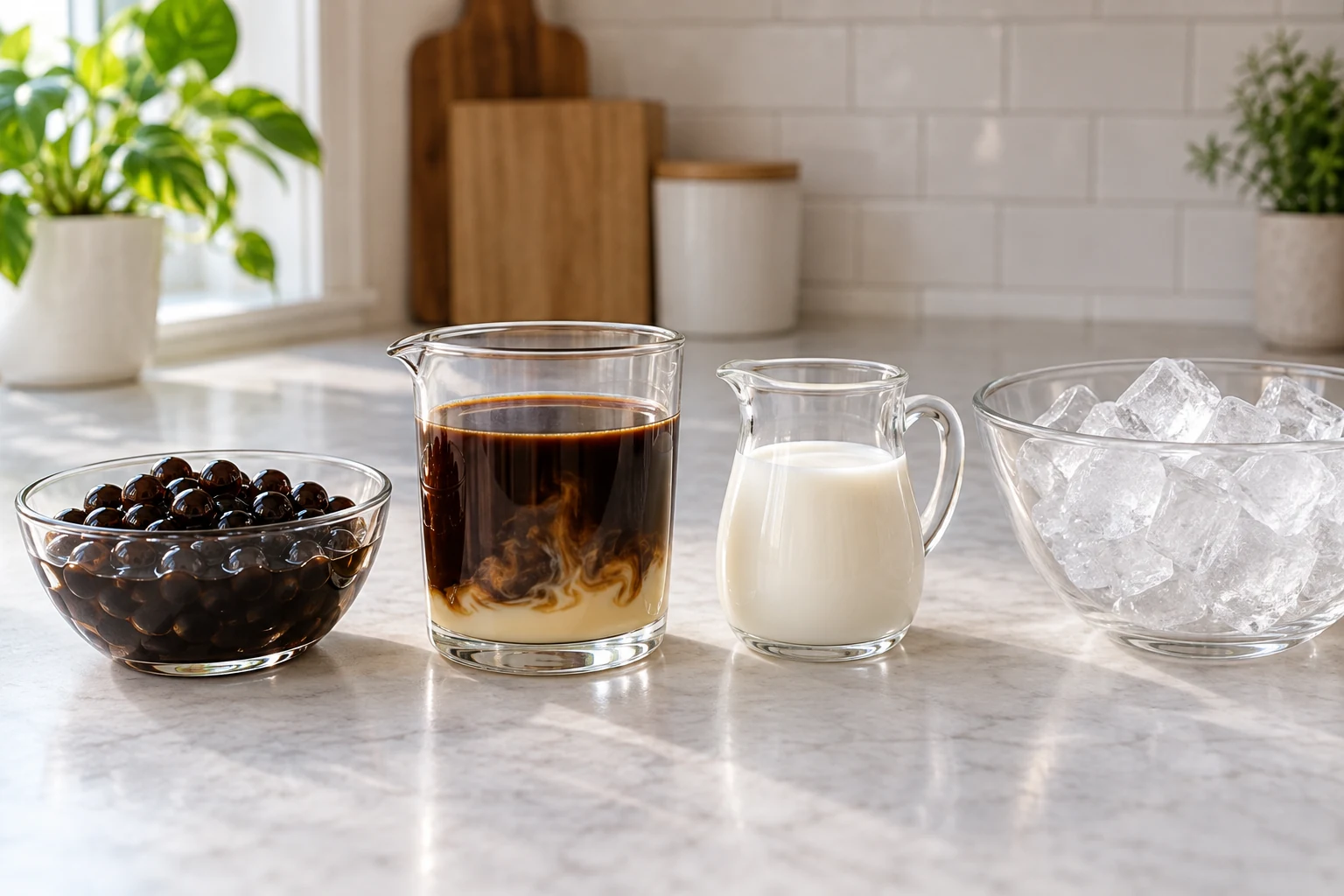
For an approximately 350-milliliter mug, consider starting with 180 milliliters of brewed black tea, 80 milliliters of milk, a small serving of freshly cooked pearls, and optional sweetener. This creates 260 milliliters of liquid before the topping. Verify the fit with your own mug and pearl portion rather than relying on the nominal mug size.
Choose a black tea you already enjoy with milk. Follow its package for leaf quantity and brewing temperature. Twinings' general guide lists three to five minutes for black tea, but your product's instructions are the better starting point when they differ. Set a timer and remove the leaves when the chosen brewing time ends.
Keep sweetener separate initially, particularly if the pearls already carry syrup. Measure a small addition into the tea, stir, and assess it only after the drink has cooled enough to taste comfortably. Brown sugar, white sugar, and syrup can each be used, but a spoonful of syrup is not equivalent to the same volume of dry sugar.
Choose dairy milk or a plant beverage whose flavor you like in tea. If the carton is sweetened or flavored, treat that as part of the recipe rather than adding your usual full sweetener portion automatically. Check ingredients and suitability for everyone who will drink it.
Coordinate three small jobs
Cook the pearls first according to the exact bag, allowing for its covered rest or rinsing instructions. Hot service does not mean skipping the manufacturer's finishing steps. If its method calls for rinsing, follow that instruction rather than treating the mug as the final cooking vessel.
For example, Bossen's Express Cook Big Tapioca directions specify a twenty-five-minute cooking stage and a five-minute covered rest. That timing applies to that product. It does not make every quick-cook pearl ready on the same schedule, and pouring hot tea over a hard center does not substitute for the required cooking.
As the pearl process approaches its finish, brew the tea separately. Separating the jobs lets you remove the tea leaves at the right time instead of leaving them in the pot while you finish the topping. Strain into a heat-suitable measuring jug if you need to check the final volume.
Warm the milk separately if you want it to cool the tea less than refrigerator-cold milk would. Use equipment intended for that purpose and follow any directions on the beverage carton. Stir as needed and avoid unattended heating. The objective is a pleasantly warm final drink, not a rolling boil of assembled milk tea.
Add the finished pearls to the mug, pour in the measured tea and milk, and stir gently. Taste the liquid only when comfortable, then adjust sweetness. Prepare one mug at a time until you know how the chosen ingredients behave; doubling the batch adds timing and serving demands without improving the first mug.
Choose equipment for hot service
Use a mug or other vessel explicitly suitable for hot drinks. Do not assume that a clear cold-drink cup, decorative glass, or bottle can accept hot liquid because it holds iced tea. Check the maker's use instructions, including restrictions on sudden temperature changes and dishwashing.
For this format, a spoon is a practical way to serve the pearls while drinking from the mug. If you use a straw, it must be suitable for hot liquids, and the drink still needs to cool enough for comfortable consumption. Avoid drawing up a mouthful of hot liquid while trying to retrieve a pearl.
Do not shake hot milk tea in an ordinary sealed cold-drink shaker. Stir in an open, suitable vessel instead. Keep the handle and surrounding surface dry, place the mug on a stable table, and let the drink cool before carrying or tasting it.
Adjust the next mug with one change
If the drink tastes too concentrated, add a measured small amount of warm water, then note the change. If tea disappears beneath the milk, reduce the milk proportion or brew a different tea strength within the product guidance next time. If sweetness dominates, change the syrup amount before changing the tea.
Serve the assembled mug promptly and enjoy it once comfortable to drink. This method is intended for immediate preparation, not extended hot holding or a thermos storage schedule. Keep unused milk according to its label and avoid treating a lukewarm leftover mug as a fresh batch.
Plan one mug without guessing the missing volume
Use a measuring jug, tea strainer, saucepan for the pearls, a timer, a heat-suitable mug and a spoon. Check the pearl packet before setting a total preparation time: its cooking and resting stages can dominate the schedule. There is no verified universal five-minute shortcut for this guide.
| Planning example | Volume | What it means |
|---|---|---|
| Brewed tea | 180 mL | Strained liquid, not water before brewing |
| Milk | 80 mL | Measure separately before warming |
| Combined liquid | 260 mL | Before sweetener and pearls |
| Nominal mug | 350 mL | 90 mL nominal space remains; verify comfortable fill with your actual topping |
These are arithmetic examples, not a tested yield. If your mug is smaller, first measure its comfortable working fill with the intended pearl portion and water. Remove that measuring water, then allocate the available liquid between tea, milk and any syrup. Do not simply pour the whole example into a smaller mug.
For the next cup, write down the tea product, strained tea volume, milk volume, sweetener and pearl portion. Change only one of those entries. A smaller milk portion and a longer steep are different interventions; changing both prevents a useful comparison.
Kristin's Ceylon milk tea test
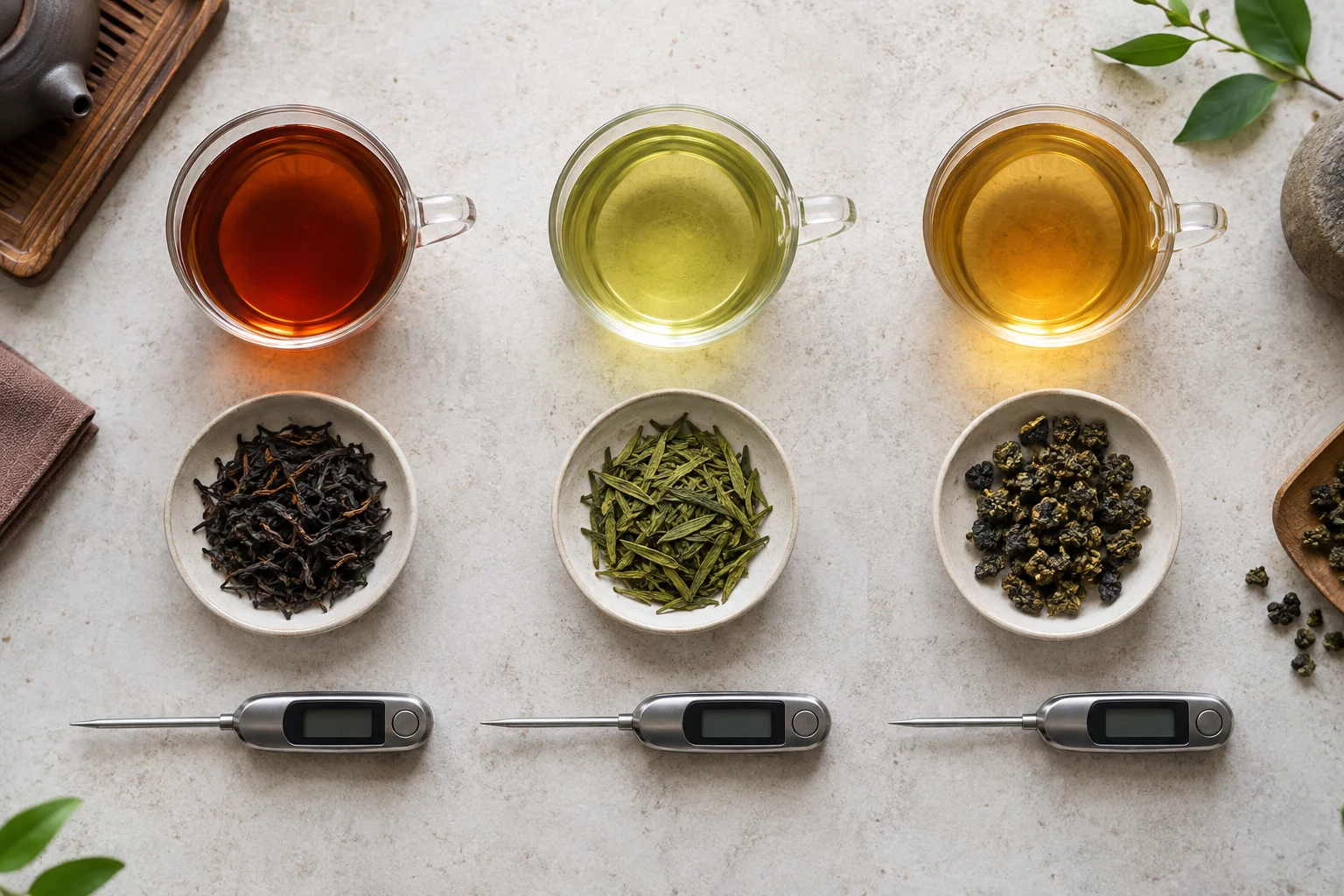
On October 18, 2026, Kristin McCoy-Ward compared Ceylon black tea at 96°C for seven minutes, 92°C for six minutes, and 88°C for six minutes. Her notes describe the first as more astringent, the second as balanced with milk, and the third as too mild. The tea brand was not recorded.
The selected batch used 12 g tea, 220 mL water at 92°C, 180 mL whole milk and 30 mL brown sugar syrup; the recorded serving temperature was 62°C. The listed ingredients do not establish a 500 mL yield. Pearls were not part of this recorded test; follow their package instructions separately.
Sources
- How to Brew the Perfect Cup of Tea — Twinings North America
- Express Cook Big Tapioca: Cooking Directions — Bossen