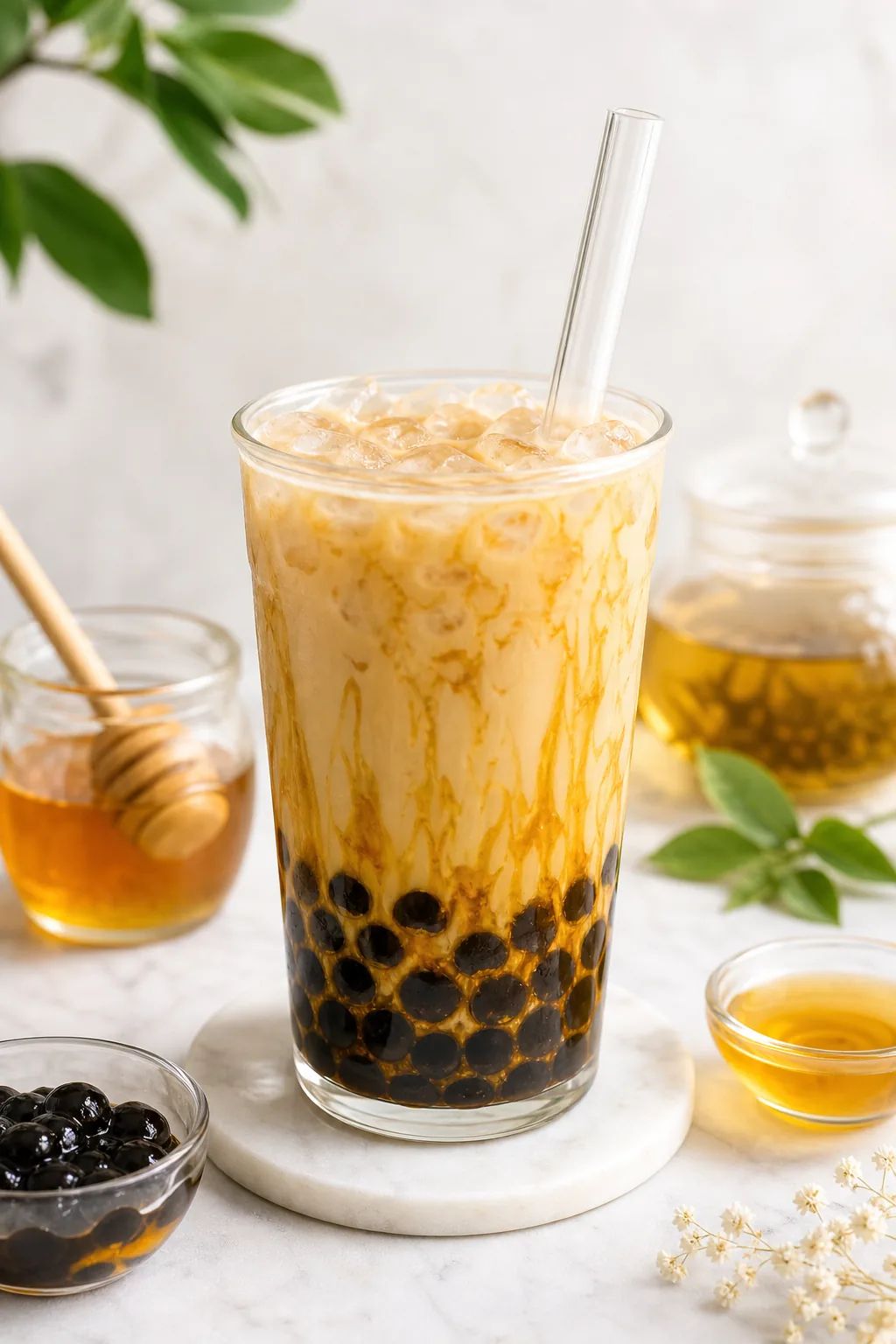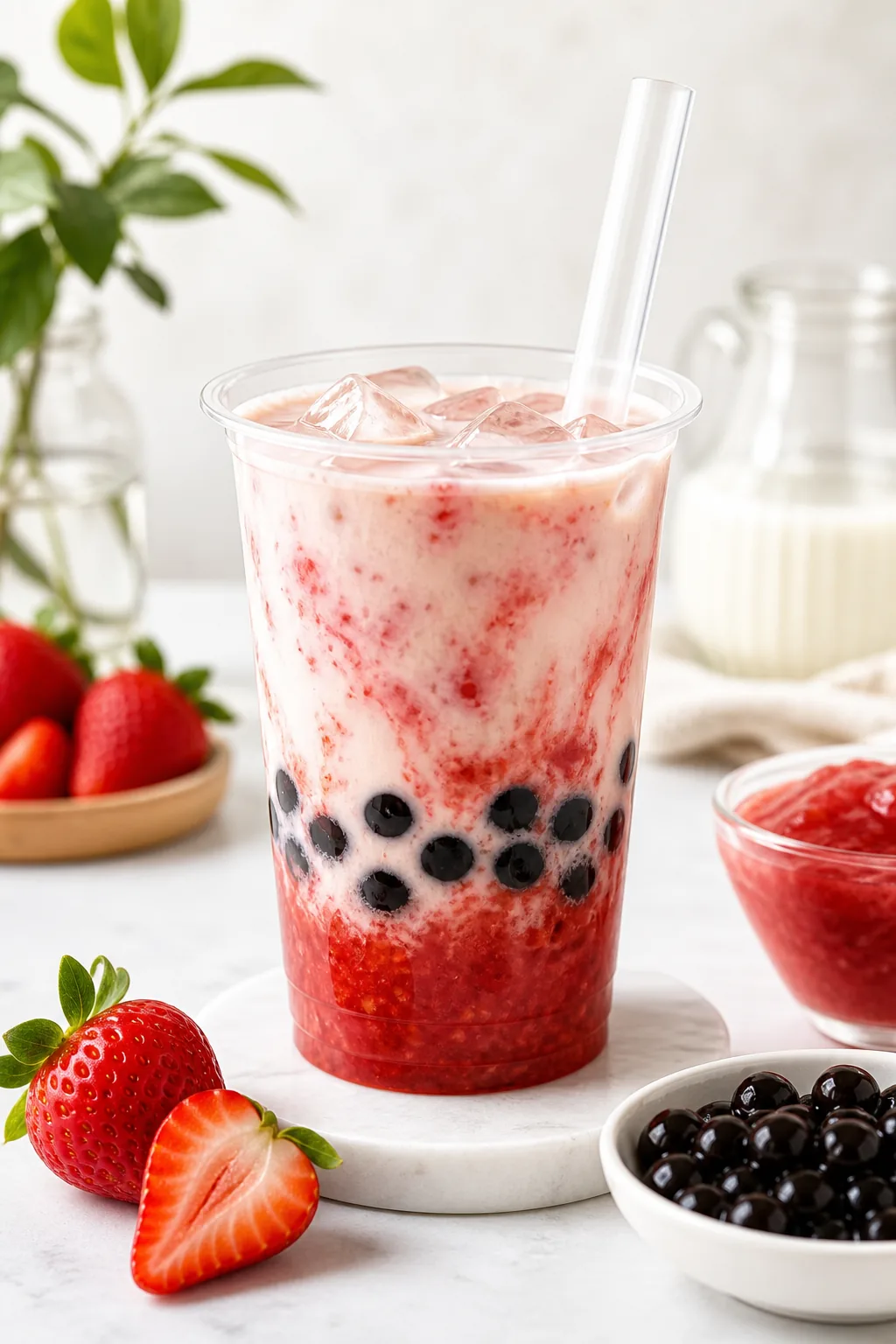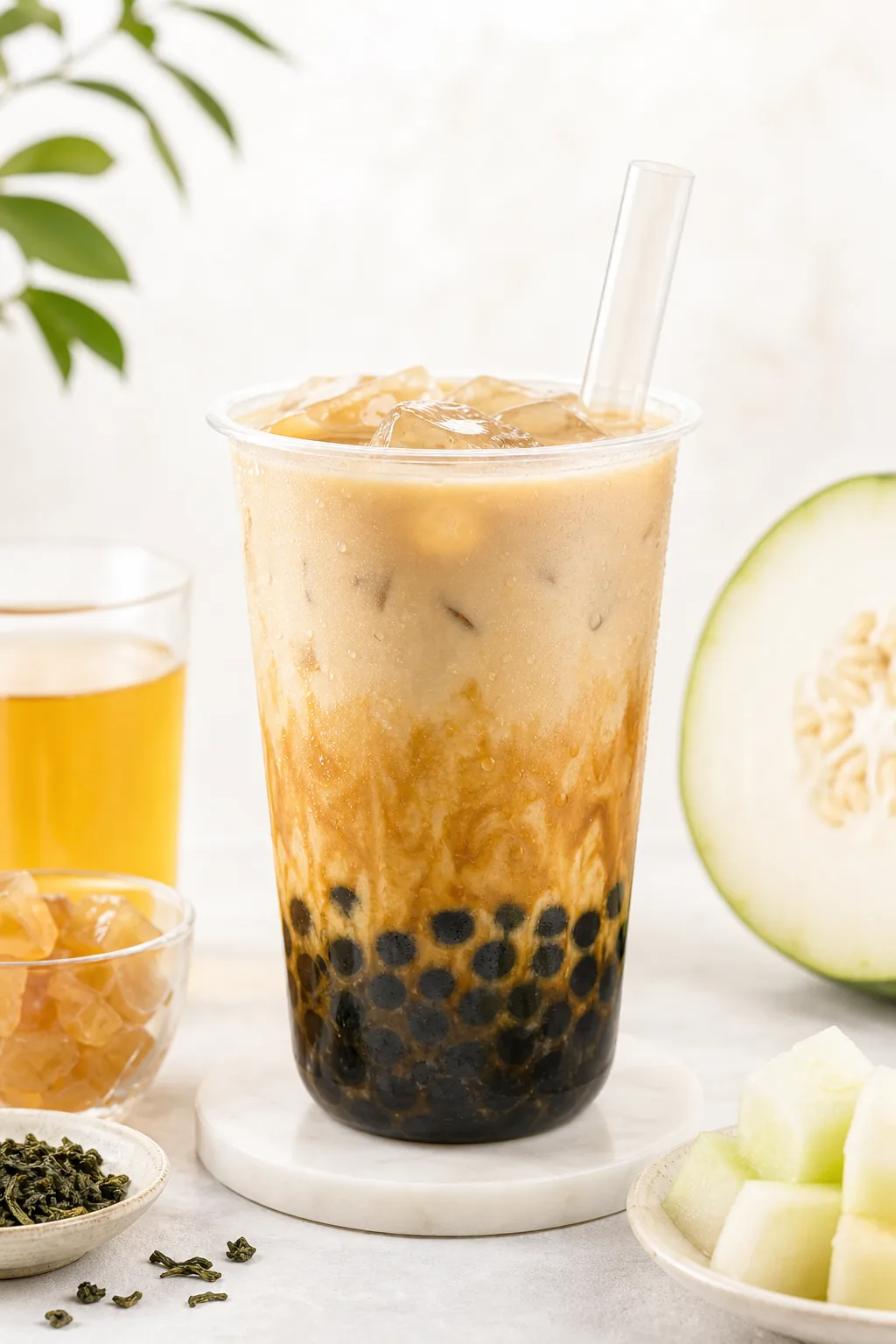
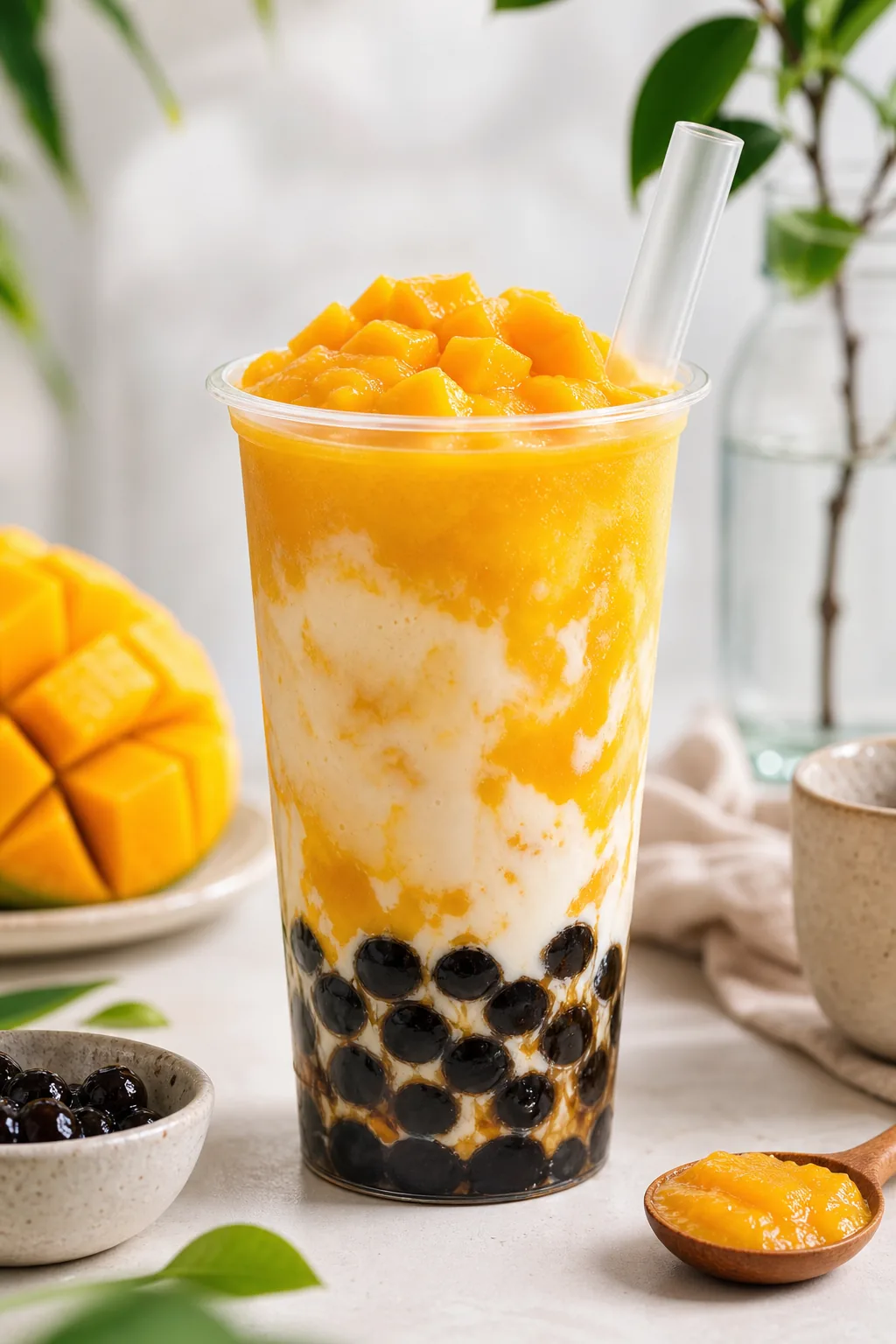
Mango Puree for Boba Drinks is a bright, cafe-style fruit puree for boba you can make at home without turning the kitchen into a commercial tea bar. This tutorial is a building block you can use again and again across milk tea, fruit tea, matcha drinks and coffee boba. The aim is simple: a drink that looks good, tastes balanced and uses ingredients you can actually find.
This recipe answers the three questions that matter most for homemade boba: will it look beautiful in the cup, can you make it without specialist training, and where do the ingredients come from? For most readers, the answer is yes. Tapioca pearls, tea, powders, syrups and toppings are usually available from Asian grocery stores, larger supermarkets, online boba suppliers or general online marketplaces.
Ingredients
- Ripe mango
- Sugar
- Lime
You can use store-bought pearls for the easiest version. If you want the drink to feel more handmade, prepare a small batch of brown sugar boba or make your own syrup. For milk, whole milk gives a classic creamy finish, while oat milk, soy milk and coconut milk are useful dairy-free options.
How to Make It
- Measure the ingredients before heating so the texture is easier to control.
- Cook gently and stir often, especially when starch, sugar or dairy is involved.
- Cool the component only as long as needed. Boba, foam and fruit puree all perform best when they are fresh.
- Use the component in one drink immediately, then store the rest in a clean container if the recipe allows it.
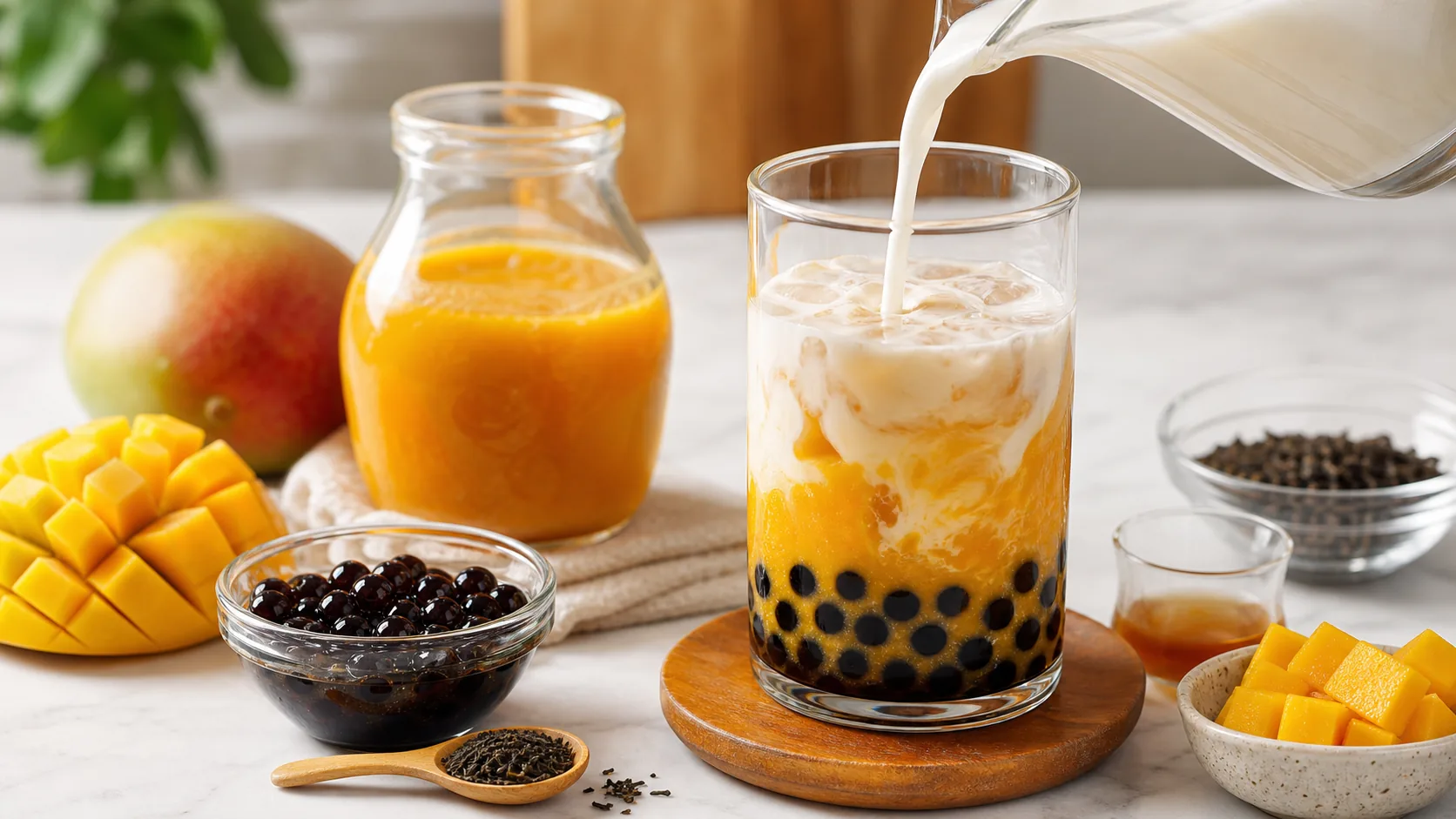
How to Make It Look Like a Boba Shop Drink
Use a clear cup if the drink has colour, fruit or syrup streaks. Spoon pearls into the glass first, then tilt the cup and let syrup run around the inside. Add ice next, then pour tea, milk or fruit puree slowly so the layers stay visible. A wide straw, a clean rim and one fresh garnish can make a homemade drink feel polished without adding much work.
If the drink uses matcha, sift the powder before whisking. If it uses taro, ube or cocoa powder, dissolve it in a small amount of hot liquid before adding milk. If it uses fruit puree, strain it only when you want a smoother cafe-style finish. Some texture is lovely in strawberry, mango and peach drinks.
Sweetness and Substitutions
Start around half sweet if you are unsure. Bubble tea can move from refreshing to heavy very quickly, especially when it includes brown sugar syrup, condensed milk, flavoured powders or sweet toppings. Add more syrup one teaspoon at a time after the drink is mixed.
For a low sugar version, use unsweetened tea, reduce syrup and choose fruit for flavour. For a dairy-free version, oat milk is the most reliable all-purpose option because it stays creamy in iced drinks. Coconut milk works beautifully with mango, taro and Thai tea. Soy milk pairs well with black tea and jasmine tea.
For caffeine-free or lower-caffeine servings, use decaf black tea, roasted barley tea, rooibos or a fruit-forward base. The texture and toppings still make the drink feel like boba even when the tea base changes.
Where to Buy the Ingredients
In the United States and Canada, look for tapioca pearls, jelly, popping boba, powders and wide straws at Asian supermarkets such as H Mart, T&T, 99 Ranch Market or local independent shops. In the UK, check larger Asian grocery stores, online East Asian pantry shops and international aisles for pearls, teas and powders. In Australia, Asian grocers and online bubble tea suppliers are usually the easiest source.
Store-bought pearls are the most practical choice for beginners. Choose quick-cook pearls if you want a weeknight drink, and traditional pearls if you care more about chew and texture. Always check the package directions because cooking time varies dramatically by brand.
Common Mistakes
Weak tea is the most common problem. Brew it stronger than usual because milk and ice soften the flavour. The second problem is old pearls. Tapioca pearls harden as they sit, so do not cook them the day before and expect the same texture. The third problem is undissolved powder. Mix powders and syrups with warm liquid first, then build the cold drink.
If the drink tastes flat, add a pinch of salt or a splash more tea. If it tastes too sweet, add ice, unsweetened milk or a little extra brewed tea. If the layers disappear, pour more slowly and use more ice to slow the mixing.
Storage
Cooked tapioca pearls are best within a few hours. Keep them in syrup at room temperature while serving, then make a fresh batch next time. Finished bubble tea is not a great make-ahead drink because the ice melts and the pearls change texture. Prepare the components ahead, then assemble when you are ready to drink.
FAQ
Can I use store-bought tapioca pearls?
Yes. Store-bought pearls are the best starting point for most home cooks. Once you understand the texture you like, homemade pearls are a fun upgrade.
Can I make this drink dairy free?
Yes. Oat milk is the safest swap for creamy milk teas. Coconut milk is especially good with tropical fruit, taro, ube and Thai tea.
How do I make it less sweet?
Use stronger tea, unsweetened milk and half the syrup. Add sweetness at the end only if the drink needs it.
Texture Targets
The best version of Mango Puree for Boba Drinks should taste deliberate, not improvised. Syrups should be glossy and pourable, not gritty. Fruit purees should be bright enough to cut through tea and milk. Tapioca pearls should be tender through the centre with a pleasant chew, never chalky, mushy or hard. Cheese foam should sit on top of the drink for a few minutes while still being soft enough to sip through.
If the texture is wrong, adjust one variable at a time. Too thick usually means the mixture cooked too long or cooled too much. Too thin usually means it needs more reduction, more chilling time or a slightly richer ingredient. With boba components, small changes matter because the finished drink has ice, milk and tea competing for attention.
Batching and Storage
Make small batches until you know your household rhythm. Cooked pearls are the shortest-lived component and should be used the same day, ideally within a few hours. Syrups are more flexible and can usually be stored in a clean jar in the refrigerator. Fruit purees keep best when they include a little lemon or lime juice, which protects the flavour and helps the colour stay fresh.
Label jars with the date and keep strong flavours separate. Wintermelon syrup, brown sugar syrup, strawberry puree and cheese foam all carry into the drink quickly, so stale or over-sweet components are easy to notice. If anything smells fermented, looks cloudy in an unusual way or changes texture sharply, discard it and make a fresh batch.
Ways to Use It
Use Mango Puree for Boba Drinks in more than one drink so the work pays off. Pair rich brown sugar components with black milk tea, coffee boba, taro milk tea and oat milk drinks. Pair fruit purees with jasmine tea, green tea, matcha and coconut milk. Pair creamy toppings with drinks that need contrast, especially bitter tea, earthy matcha or tart fruit.
For a low sugar drink, use a smaller amount of the component and make the tea base stronger. For a dairy-free drink, combine it with oat milk, soy milk or coconut milk depending on the flavour. For a party, prepare the component first, then let guests build their own boba with tea, milk, ice and toppings.