The useful question is not which topping is “real boba.” It is which experience you want in the next drink: a chewy starch pearl that needs preparation, or a flavored liquid-filled topping served from its package. Both appear on bubble-tea menus, but treating them as interchangeable creates shopping and timing mistakes.
Use the comparison below to choose a product and plan a serving. The examples come from current Bossen manufacturer pages, not a Boba Bloom tasting. Other brands, sizes, and instant formats can differ, so the delivered label remains the final reference for ingredients and handling.
Choose the bite before choosing the flavor
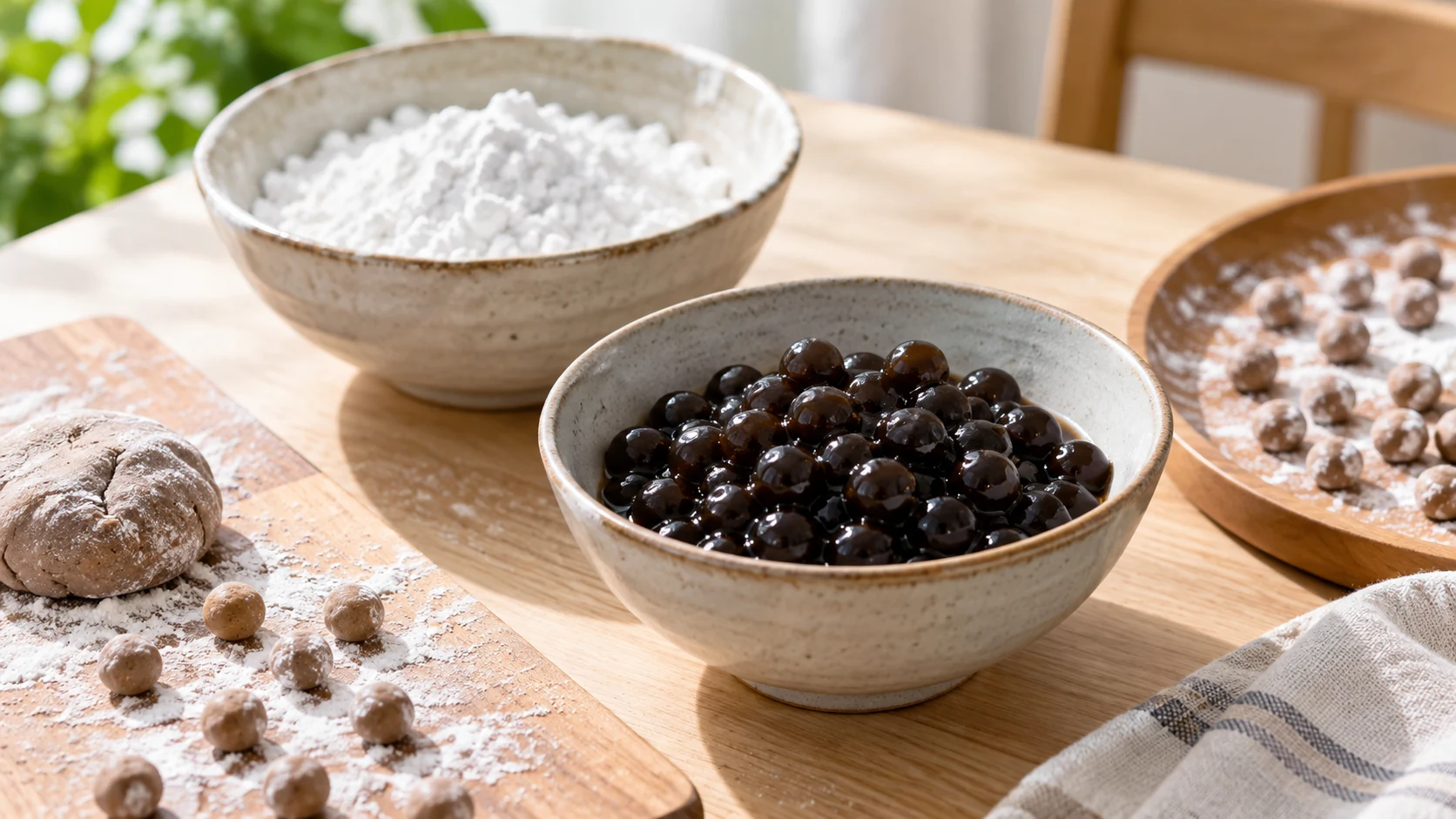
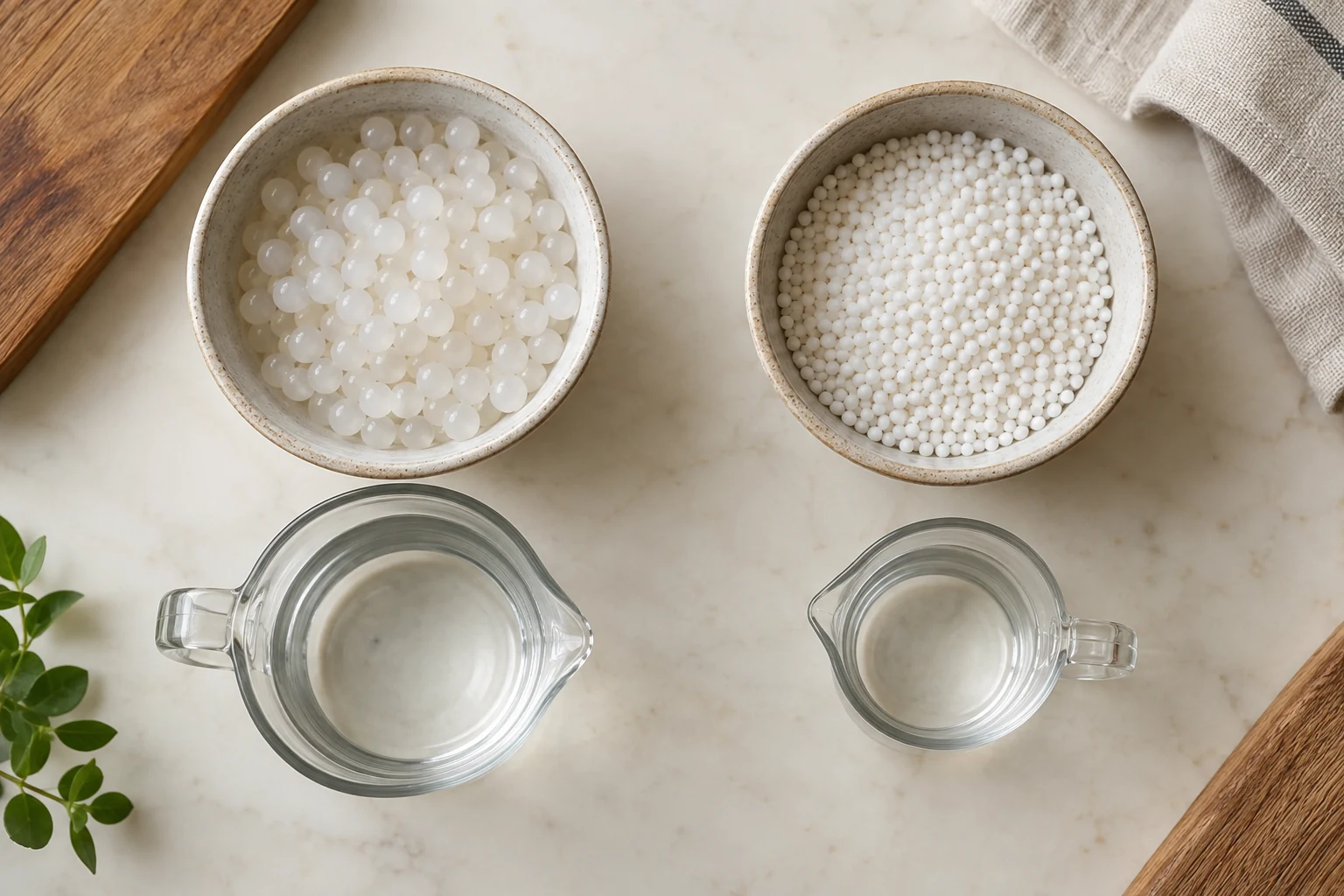
Traditional tapioca pearls provide a substantial chew. Popping boba is sold for a burst of flavored liquid when its outer layer breaks. If the pleasure you want is chewing a pearl between sips of milk tea, popping boba will not reproduce that task simply because it is round.
If you want a fruit accent that changes individual sips, a popping topping may fit the drink more directly. Start with a flavor you would willingly mix into the tea itself. A strawberry topping is not neutral just because you drain away some of the packing liquid; the topping still contributes its own flavor.
For a mixed group, describe the texture rather than promising everyone “boba.” Some guests may expect a chewy topping and find a liquid-filled one surprising. Keeping the two in separate serving containers also lets people choose without forcing every glass to contain the same mixture.
| Decision | Tapioca example | Popping example |
|---|---|---|
| Main purpose | Chewy topping | Flavored burst |
| Preparation question | What cooking and resting steps does this bag require? | How does this tub direct you to serve and store it? |
| Sweetness question | Is the product or its coating already sweetened? | What sweeteners are inside the topping and packing liquid? |
| Purchase constraint | Time and equipment to prepare it | Opened-container use and refrigerator space |
A real popping-boba label reveals more than the front photograph
Bossen's Strawberry Bursting Boba Mini ingredient list includes water, fructose, strawberry juice, sodium alginate, calcium salts, acids, and other ingredients. That is a specific manufactured formulation. It is not evidence that every product called popping boba has the same composition or dietary suitability.
Read the entire ingredient and allergen panel, particularly if avoiding a named ingredient. A fruit picture cannot tell you the juice percentage, sweetener type, color ingredients, or cross-contact information. A product described as fruit flavored should not be counted as equivalent to a portion of whole fruit merely because both use the same fruit name.
The cited Bossen recipe shakes the liquid drink first and adds the popping topping afterward. That sequence is a useful handling distinction: prepare the tea mixture, then add the topping according to its directions. Do not borrow a tapioca boiling method for a tub whose instructions describe direct assembly.
The same page requires refrigeration after opening. Check your particular tub for its full opened-use direction, and note the opening date. An unopened package's date does not answer how to manage a partially used container.
Put tapioca on the clock
For a contrasting manufacturer example, Bossen Express Cook Big Tapioca specifies cooking followed by a covered rest. The word “express” is therefore not a promise that the topping is ready immediately. Read all stages before deciding whether a bag fits the time you have.
Make the timing decision before brewing tea. If your pearls have a substantial cooking and resting period, that process may determine the serving time. If you buy a different instant format, follow that product's method instead. The practical difference is between specific packages, not a universal rule that every tapioca pearl requires the same saucepan treatment.
Check the required water quantity and your pot capacity as well. A small advertised serving does not necessarily mean a tiny amount of cooking water. If the maker provides directions only for a commercial batch, ask for household guidance or choose a package with instructions you can follow accurately.
Cooked holding instructions deserve as much attention as the cooking steps. Prepare only the amount you expect to serve within the maker's stated window. A large dry package may be convenient pantry stock while a large cooked batch is inconvenient for two people who drink at different times.
Compare the servings you will actually use
A low price per kilogram is not automatically a low cost per drink. For popping boba, note whether the stated net weight includes packing liquid and how the serving size is defined. For tapioca, distinguish the dry amount purchased from the cooked amount served. Comparing those two weights as if they represented identical portions can mislead.
Use a simple household estimate: package cost divided by the number of servings you realistically expect to finish. If half a tub is likely to remain unused, include that possibility before buying a food-service size. Avoid invented exact yields when the package does not state how it measures a serving.
For an occasional drink, a smaller container can be the more practical choice even when its unit price is higher. For a planned gathering, a larger container may work if its label, opening schedule, cold storage, and serving utensils are already accounted for. Purchase around a real occasion rather than an imagined future habit.
Fit the topping to the drink you already like
For a first comparison, keep the tea base familiar. Try one topping in one glass rather than adding several new fruit syrups, a different milk, and a second topping at once. Otherwise a disappointing result tells you little about which component caused it.
With popping boba, consider reducing the separate sweetener initially, then taste the assembled drink. With tapioca, count any sweetened coating as part of the drink's sweetness plan. These are adjustment strategies, not claims that one category is inherently lower in sugar. Use the actual nutrition label if that comparison matters.
Serve either topping with equipment suited to its size. A spoon is a valid choice when the available straw does not work comfortably. Do not force large pieces through a narrow straw or treat a product's name as proof that it is suitable for every drinker.
Make the purchase with two final questions
First, does the topping deliver the texture and flavor you want? Second, can you follow the exact package's preparation and opened-storage instructions with your available time and space? A yes to both is more useful than choosing whichever product has the most dramatic color or the largest tub.
If texture is the priority, select the format around that preference. If convenience is the priority, compare actual instructions instead of category stereotypes. Keep the package or a clear photograph of its directions until the contents are used; an online recipe cannot reconstruct missing handling information reliably.
Sources
- Strawberry Bursting Boba Mini Bossen
- Express Cook Big Tapioca Bossen